Forget the Basement Bar: 5 Essential Stone Features to Create the Ultimate Backyard Entertainment Hub
St. Louis Stone & Brick • December 8, 2025
As we approach the end of 2025, a significant shift in residential architecture and lifestyle design has solidified across Missouri. The era of the dark, recessed basement bar is fading, replaced by a demand for open-air sophistication. Homeowners in St. Louis and surrounding areas are increasingly looking upward and outward, seeking to transform their properties into comprehensive entertainment hubs. To achieve this, integrating high-quality hardscaping is not merely an aesthetic choice; it is a structural necessity for creating a durable, high-value outdoor living space.
At St. Louis Stone & Brick, we have observed that true outdoor luxury is defined by the permanence and technical precision of the materials used. While wood decks and temporary gazebos have their place, they lack the thermal mass, durability, and European-inspired elegance of masonry.
If you are planning to elevate your property in Chesterfield or Ladue, focusing on these five essential stone features will ensure your backyard surpasses the utility and comfort of any indoor basement bar.
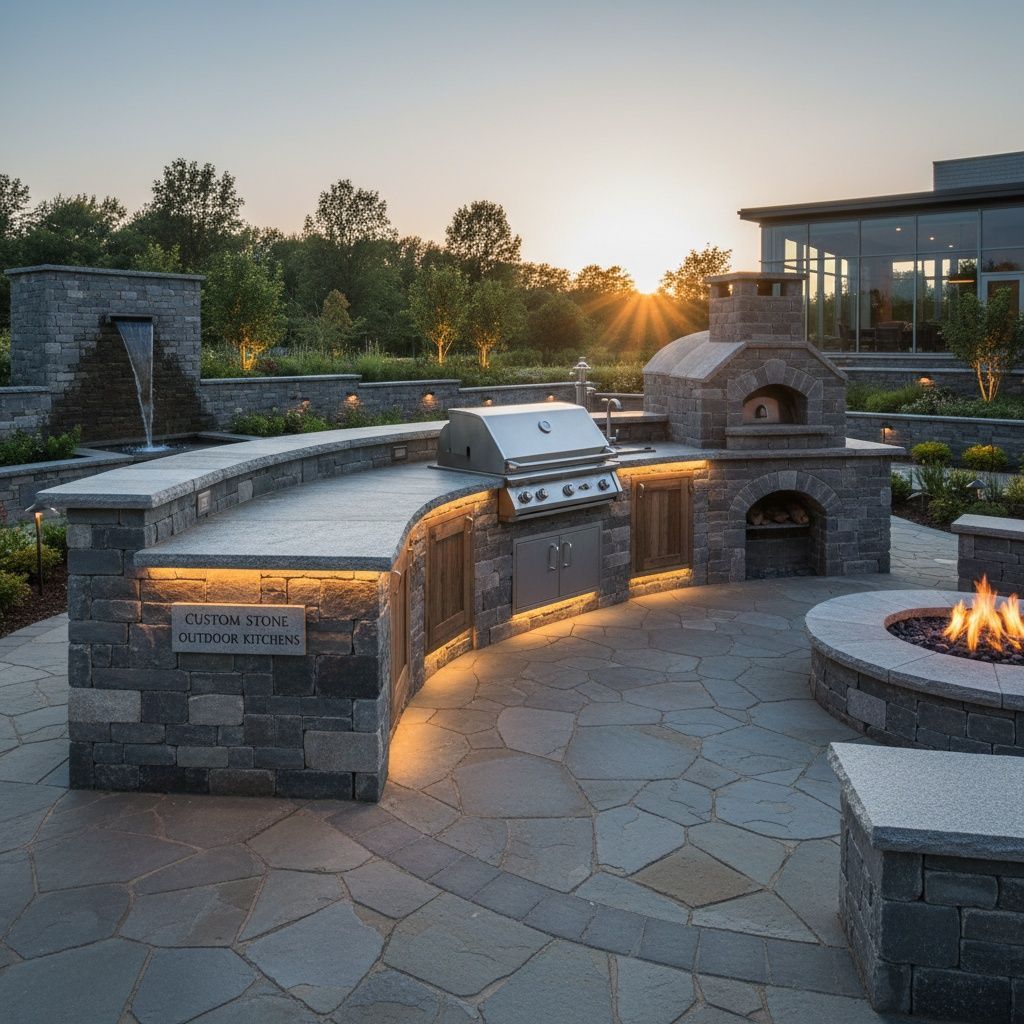
1. The Culinary Center: Custom Stone Outdoor Kitchens
To truly compete with an indoor entertainment space, a backyard must offer culinary capabilities that go beyond a standalone grill. A fully integrated outdoor kitchen serves as the anchor of the patio, providing a gathering point that mimics the magnetic pull of an indoor kitchen island.
Technical Considerations for Masonry Kitchens
Unlike prefabricated islands, a custom masonry kitchen is built to withstand the rigorous freeze-thaw cycles characteristic of the Midwest. The construction process typically begins with a concrete footing below the frost line to prevent heaving. The structural core is often built from concrete block (CMU), which is then faced with Stone Brick Veneer or natural stone. From a technical standpoint, the choice of stone is critical. We recommend materials with low porosity to prevent water absorption and subsequent cracking during freezing temperatures.
Furthermore, the countertop installation requires precise leveling and support, particularly when using heavy slabs of granite or bluestone.
A masonry outdoor kitchen allows for the seamless integration of high-end appliances, pizza ovens, kegerators, and side burners, encased in a structure that offers superior fire resistance and load-bearing capacity compared to wood or metal frames.
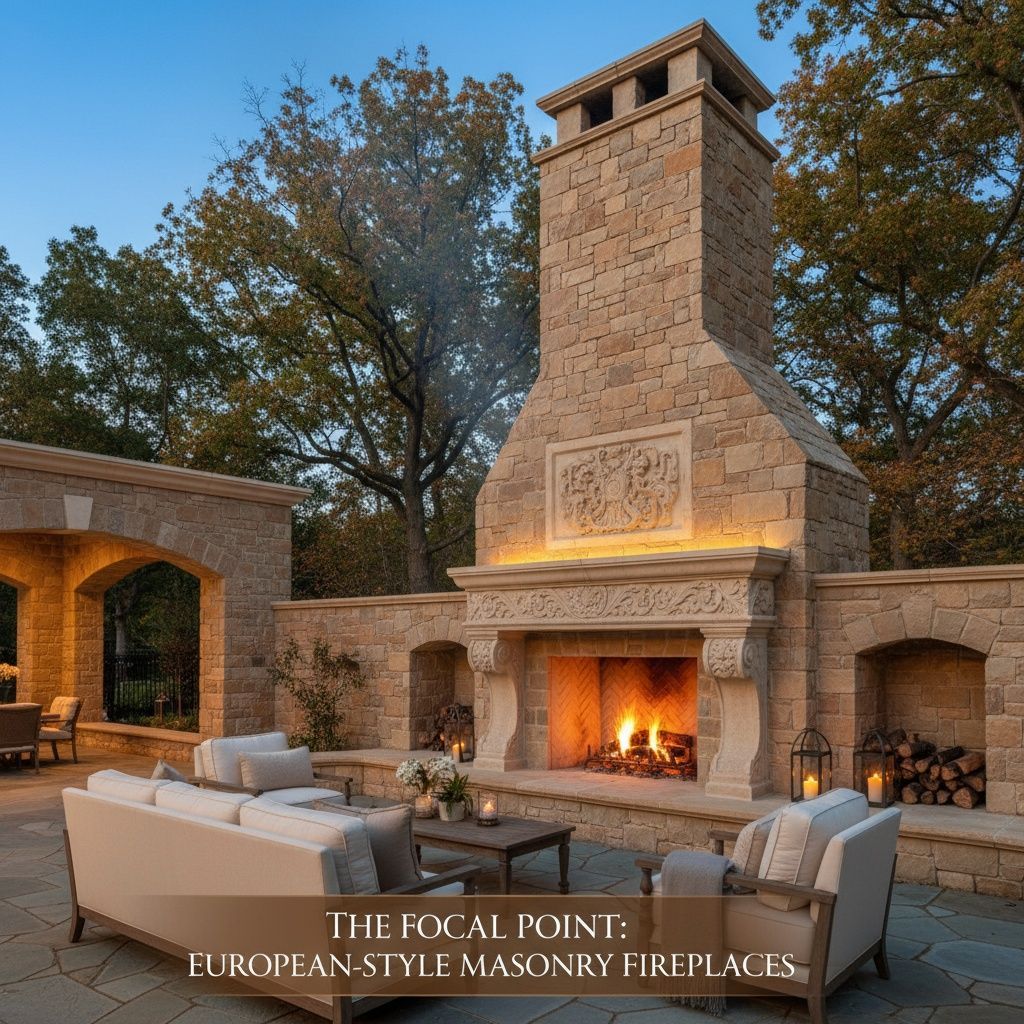
2. The Focal Point: European-Style Masonry Fireplaces
While fire pits offer a casual campfire atmosphere, a full-scale masonry fireplace introduces architectural verticality and Old World charm to your outdoor space. It acts as a visual anchor, drawing the eye and defining the "living room" portion of your patio.
Thermal Mass and Radiant Heat
The engineering behind a true masonry fireplace involves complex calculations regarding airflow, flue size, and firebox geometry to ensure a proper draw of smoke. However, the primary benefit of a stone fireplace over a metal insert is thermal mass. Stone absorbs heat from the fire and radiates it slowly back into the seating area, extending your entertaining season well into the late autumn and early winter months.
Incorporating European design elements, such as a limestone mantel or a herringbone brick firebox, connects your exterior hardscape with the historical architectural lineage found in areas like Clayton and University City. This is not just a heat source; it is a permanent piece of art constructed by skilled masons.
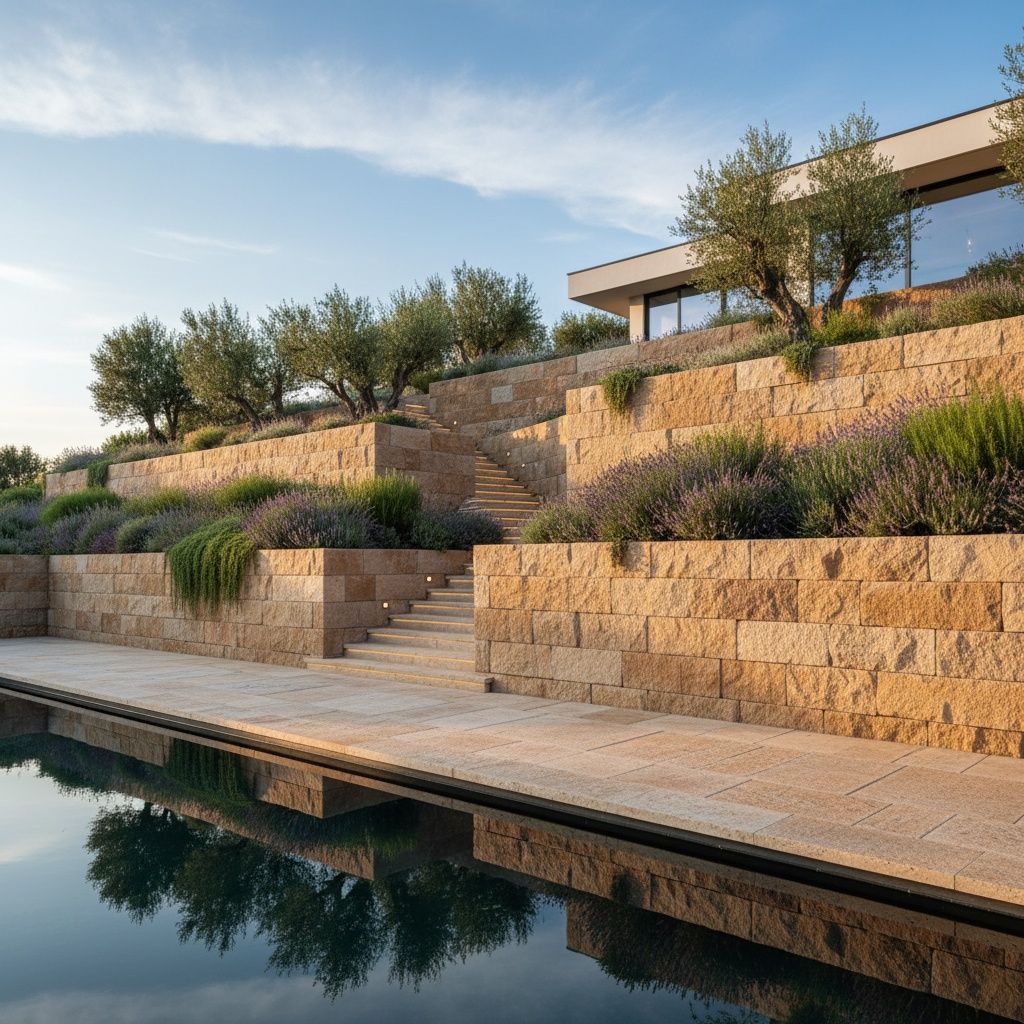
3. Structural Definition: Retaining Walls and Multi-Level Terracing
Many properties in St. Louis feature varying topography that can limit usable entertainment space. Rather than viewing a slope as a disadvantage, we utilize retaining walls to create multi-level terracing. This engineering solution carves out distinct "rooms" in your backyard, perhaps a dining area on the upper terrace and a lounging area on the lower level.
Hydrostatic Pressure and Drainage
A common failure in amateur landscaping is the neglect of hydrostatic pressure, the force exerted by water accumulating behind a wall. Our technical approach involves installing proper drainage aggregates and piping behind every stone wall to route water away from the structure.
We often utilize segmental retaining wall systems or natural stone mortared walls with weep holes. Beyond their structural utility, these walls provide seating options. Capping a retaining wall with smooth limestone creates a "seat wall," eliminating the need for excessive patio furniture and allowing for larger guest capacity during events. This dual-purpose design is a hallmark of efficient hardscape planning.
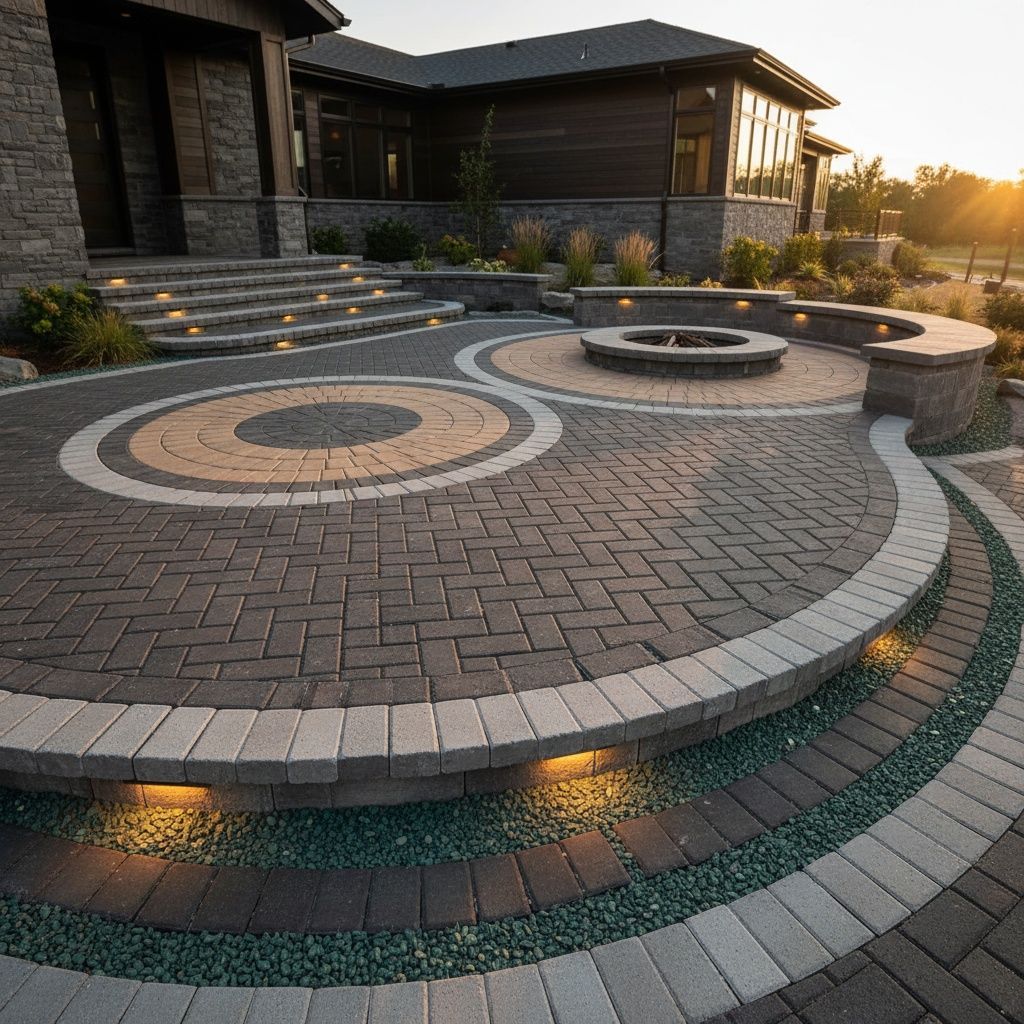
4. The Foundation: Permeable and Interlocking Paver Patios
The basement bar relies on carpet or tile; the outdoor entertainment hub relies on a robust paver patio. While poured concrete is a functional option, interlocking pavers offer superior durability and aesthetic flexibility.
The Science of Flexible Pavement
Interlocking paver systems are classified as "flexible pavements." Unlike a rigid concrete slab that may crack when the ground beneath it shifts, a paver system can articulate slightly with soil movement without structural failure.
This is particularly valuable in Missouri's clay-heavy soil.The installation process is rigorous, requiring excavation, soil compaction, and the layering of geotextile fabric, base rock, and bedding sand before the pavers are laid. For homeowners concerned with water management, permeable paver systems allow rainwater to infiltrate through the joints and into the subsoil, reducing runoff and preventing pooling on the patio surface. Whether you choose the rustic look of tumbled pavers or the sleek lines of modern slate, the result is a high-performance floor that anchors your entertainment hub.
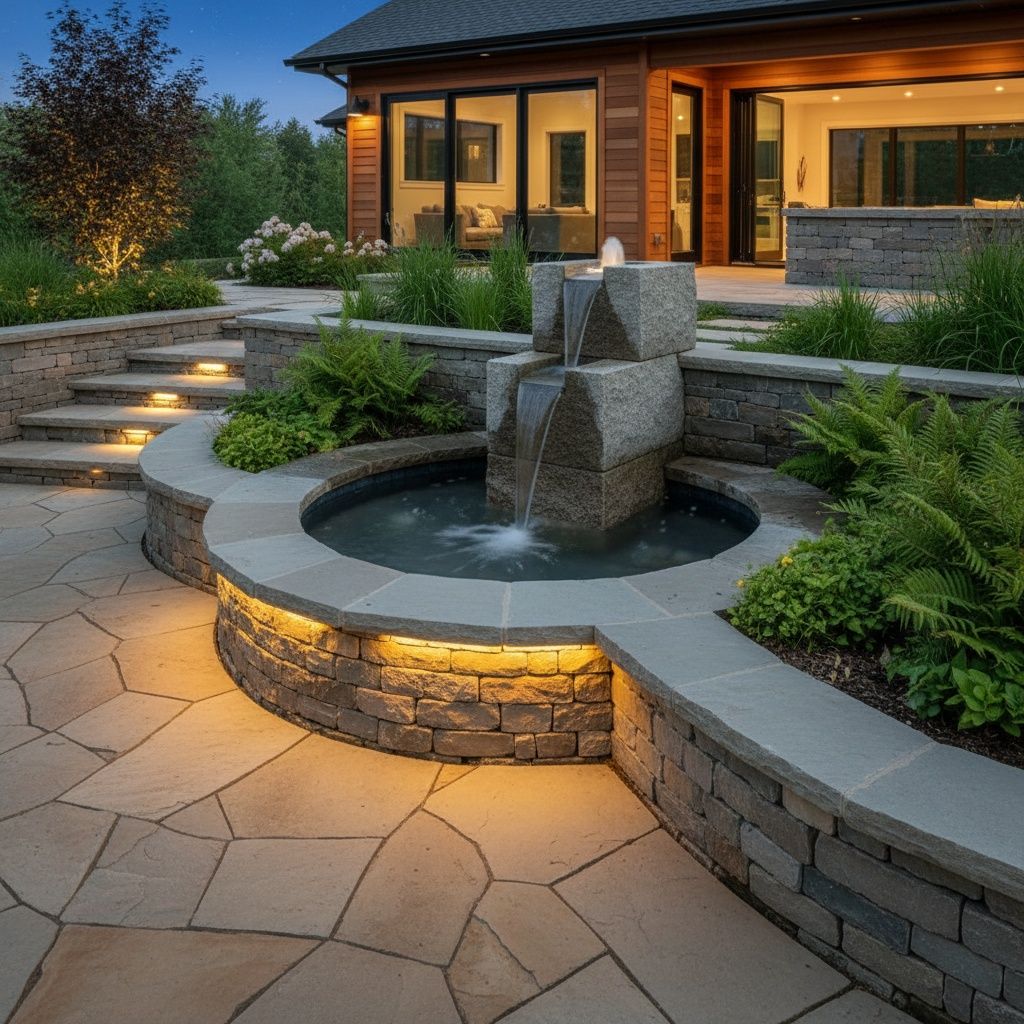
5. Sensory Ambience: Integrated Water Features
To fully sever the connection to the indoor world and immerse your guests in an outdoor oasis, sound is just as important as sight. Water features, such as stone fountains, pondless waterfalls, or sheer descents integrated into retaining walls, provide a soothing white noise that masks neighborhood sounds and traffic.
Hydraulic Integration
In Masonry, integrating water into stone structures requires careful hydraulic planning. The plumbing must be concealed within the masonry work during construction, ensuring that the mechanics are invisible while remaining accessible for maintenance.
We frequently design water features that recirculate water, minimizing waste while maximizing visual impact. Using natural stone for the spillways creates a harmonic resonance that artificial materials cannot replicate.
This feature transforms a standard patio into a tranquil retreat, rivaling the atmosphere of a luxury resort.
Expert Tip: Selecting Materials for Longevity
When designing your outdoor entertainment hub, the selection of stone is not just about color; It is about geological density.
In the Midwest, we recommend selecting stones with high compressive strength and low absorption rates. Materials like granite and certain dolomitic limestones perform exceptionally well against weathering.
Conversely, highly porous sandstones may require frequent sealing to prevent spalling. Always consult with a masonry specialist to ensure your material choices are compatible with the local climate.
For more on this, read our guide on Choosing the Right Brick or Stone for Your St. Louis Home.
Frequently Asked Questions
How long does it take to install a complete outdoor entertainment hub with these features?
The timeline varies significantly based on the project's scale and complexity. A project involving a patio, outdoor kitchen, and fireplace typically requires 4 to 8 weeks.
This includes excavation, base preparation, masonry construction, and curing time. We provide detailed project schedules during the consultation phase.
Do I need a permit for a masonry fireplace or outdoor kitchen in St. Louis?
Yes, most municipalities, including Webster Groves and Richmond Heights, require permits for permanent structures, especially those involving gas lines (for kitchens) or fireboxes. St. Louis Stone & Brick handles the permitting process to ensure all setbacks and building codes are met.
Can you match the new stone features to the existing masonry on my house?
Absolutely. Matching existing brick or stone is a core part of our expertise. We utilize tuckpointing techniques and source materials that complement or perfectly match your home's vintage and style, ensuring the new addition looks like it was part of the original architecture.
Is a stone patio more expensive than a wood deck?
Initially, a stone patio or stone deck may have a higher upfront cost due to the labor-intensive site preparation and materials.
However, stone requires significantly less maintenance (no staining or sealing required for many types) and has a much longer lifespan than wood, often resulting in a better long-term return on investment.
Conclusion
The shift from the basement bar to the backyard entertainment hub is more than a trend; it is an embrace of a lifestyle that values nature, craftsmanship, and enduring quality.
By incorporating essential features like a custom outdoor kitchen, a masonry fireplace, and structural stone terracing, you are not just building a patio, you are expanding your home's footprint with spaces designed for making memories..
Ready to elevate your outdoor living experience?
At St. Louis Stone & Brick, we bring European-inspired craftsmanship to every project. Whether you are envisioning a grand limestone fireplace or a precision-laid paver patio, Our team is ready to execute your vision with technical excellence.
Contact us today to schedule a consultation and begin the transformation of your property.
St. Louis Stone & Brick: Your Guide to Timeless Materials