The Hidden Element of Historic Charm: Expert Repair and Restoration for St. Louis Limestone Window Sills and Lintels
St. Louis Stone & Brick • December 3, 2025
St. Louis is a city defined by its distinctive red brick architecture, yet the unsung heroes of our historic facades are often the limestone accents that frame them. Walking through the storied streets of the Central West End or Lafayette Square, one notices the cohesive aesthetic that defines our neighborhoods. However, as a Senior Content Strategist for St. Louis Stone & Brick, I often see homeowners overlook the critical structural components that protect their masonry. The most vital of these are the window sills and lintels. Without proper maintenance and professional Masonry Work, these stone elements can degrade, leading to significant water intrusion and structural instability.
In this comprehensive guide, we will delve into the technical aspects of limestone window sill repair and lintel restoration, exploring why these elements fail, the science behind the repair, and how preserving them safeguards both the beauty and value of your home.

The Anatomy of Historic Windows: Lintels and Sills Defined
To understand the restoration process, one must first understand the architectural function of these stone elements. They are not merely decorative; they serve specific engineering purposes that keep your home dry and stable.
The Lintel:
The Weight Bearer The lintel is the horizontal block that spans the space across the top of a window or door opening. In St. Louis architecture, these are predominantly cut from heavy grey limestone. The lintel acts as a load-bearing beam, supporting the weight of the brickwork and roof structure above the opening. If a lintel fails or cracks, the bricks above it can sag, leading to "step cracking" in the mortar joints above the window.
The Sill:
The Water Diverter The sill sits at the bottom of the window frame. While it provides a visual base, its primary function is water management. A properly cut limestone sill is pitched (sloped) away from the window pane to direct rainwater away from the building's facade. Crucially, historic sills feature a "drip edge", a groove cut into the underside of the projecting stone, which breaks the surface tension of water, causing it to drip to the ground rather than running back down the face of the building wall. When this edge erodes, water runs down the brick, accelerating mortar deterioration and necessitating premature Tuckpointing. This makes timely limestone window sill repair crucial for preserving the building envelope.
The Science of Stone Decay: Why St. Louis Limestone Fails
Limestone is a sedimentary rock composed largely of calcium carbonate. While durable, it is porous and reactive to environmental factors. In the St. Louis region, specifically, three main antagonists attack your stonework.
1. The Freeze-Thaw Cycle
St. Louis experiences drastic temperature fluctuations. Porous limestone absorbs moisture from rain or humidity. When temperatures drop below freezing, that trapped water expands by approximately 9%. This expansion exerts tremendous internal pressure on the stone (tensile stress). Over repeated cycles, this leads to spalling, where the face of the stone flakes or pops off, or deep structural cracking.
2. Carbonation and Acid Rain
Historically, industrial cities like St. Louis had higher levels of sulfur dioxide in the air. When mixed with rain, this creates mild acid rain. This acid reacts with the calcium carbonate in the limestone, converting it into gypsum. Gypsum is water-soluble and washes away, slowly eroding the sharp details of the stone and rounding the edges of sills, reducing their ability to shed water effectively.
3. Ferrous Jacking (Rust Heave)
Many lintels installed in the late 19th and early 20th centuries were reinforced with steel angles or rebar hidden behind or inside the stone. As moisture penetrates the stone or failing mortar joints, this steel rusts. Iron oxide (rust) occupies up to seven times the volume of the original metal. This volumetric expansion creates unstoppable force, cracking the limestone from the inside out. This is frequently seen in older homes in areas like University City.
Assessment: Identifying the Severity of Damage
Before initiating a restoration plan, we categorize the damage. Not every crack requires full replacement, but ignoring minor signs can lead to major failures.
- Hairline Cracks: Often surface-level, caused by minor settling or thermal expansion. These can typically be sealed as part of a basic limestone window sill repair.
- Spalling/Exfoliation: The face of the stone is peeling away. This exposes the softer inner core of the stone to rapid decay.
- Vertical Shear Cracks: A clean crack running vertically through a lintel is a sign of structural stress or shifting foundations. This requires immediate shoring.
- Displacement: If the stone has physically shifted out of alignment, the surrounding masonry is compromised.
The Restoration Protocol: Repair vs. Replacement
At St. Louis Stone & Brick, we approach every limestone window sill repair project with the mindset of "preservation first." We utilize techniques grounded in Old World Craftsmanship to maintain the historical integrity of your property.
Composite Patching (For Surface Damage)
For cosmetic spalling or shallow chips, we utilize specialized cementitious stone repair mortars. This is not standard concrete; it is a vapor-permeable composite designed to match the physical properties (coefficient of thermal expansion) of natural limestone.
- Preparation: We cut back the damaged area to sound stone, creating a "key" for the patch to mechanically bond to.
- Armature: For deeper repairs, stainless steel pins and wire may be installed to reinforce the patch.
- Application: The patch material is applied in layers.
- Tooling: Artisans tool the surface to replicate the texture of the surrounding aged limestone, ensuring the repair is virtually invisible.
The Dutchman Repair (For Significant Sections)
When a large section of a sill or lintel is missing or rotted, but the remainder is sound, we employ a “Dutchman".
This involves cutting out the geometric section of the damaged stone and replacing it with a newly carved piece of matching limestone. The new stone is adhered with epoxy and pinned into place.
This is preferred over patching for corners and edges where durability is paramount.
Full Replacement (For Structural Failure)
If a lintel has cracked through or a sill has disintegrated beyond repair, full replacement is necessary. This is a heavy masonry operation.
- Shoring: The masonry above the opening must be supported with temporary steel props to prevent collapse.
- Removal: The old stone is carefully extracted.
- Installation: A new limestone unit, cut to precise measurements, is hoisted into place. We often install flashing above lintels and below sills during this phase to add a modern layer of waterproofing.
- Integration: The surrounding brickwork is toothed back in, and mortar joints are pointed to match the existing color and profile.
The Role of Hardscaping in Protecting Foundations
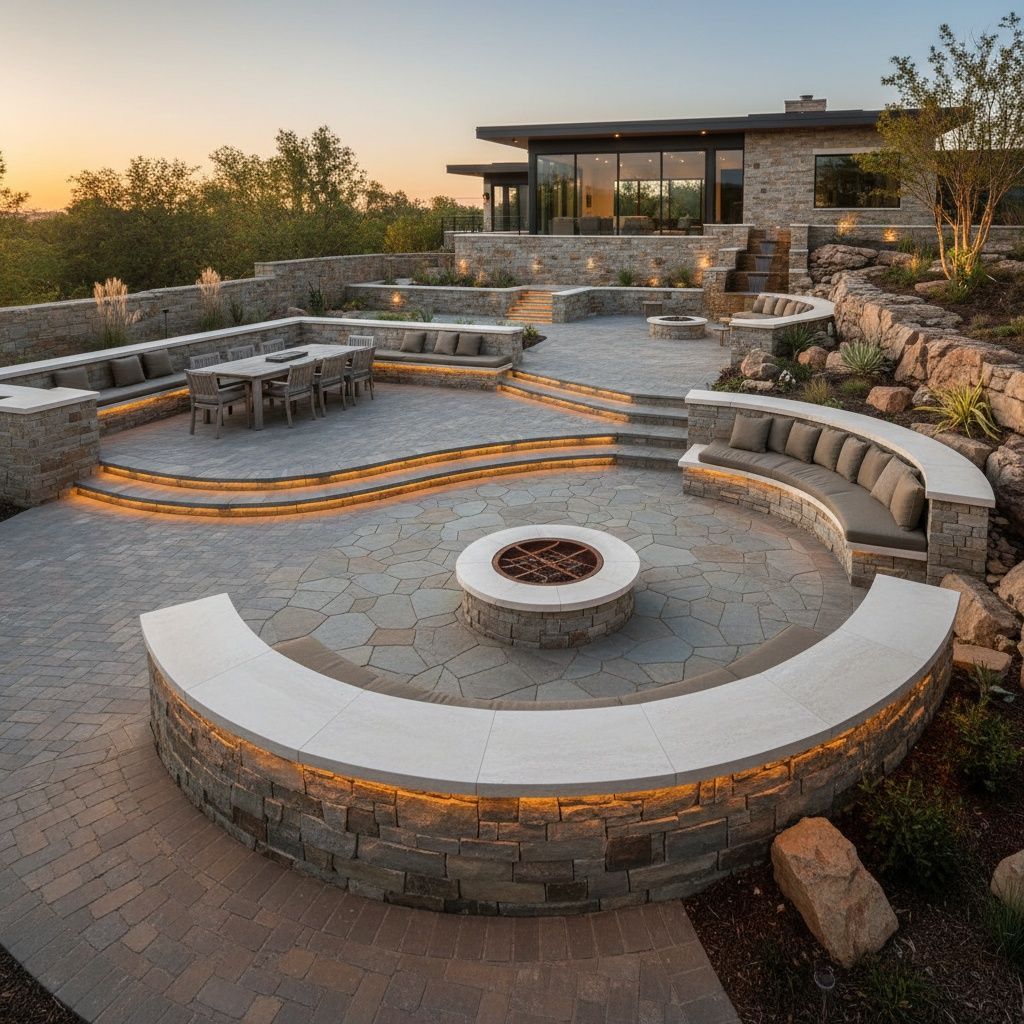
While we focus often on the windows themselves, it is important to note that water management is a holistic system. If your sills are failing, water may be pooling near your foundation. Integrating proper Hardscaping and drainage solutions, such as permeable pavers or properly graded beds, works in tandem with your masonry to keep the home structurally sound.
Choosing the Right Material: Limestone Alternatives?
While natural Indiana Limestone is the gold standard for St. Louis historic renovations, some homeowners opt for high-quality cast stone (architectural concrete) for a cost-effective alternative that mimics the look of limestone.
However, for homes in historic districts like Clayton or the Central West End, maintaining the authentic natural stone is often a requirement of local preservation boards. We assist homeowners in navigating these regulations to ensure compliance while achieving a durable result.
Expert Tip: The "Drip Edge" Detail
Don't ignore the underside of your window sill.
Many painters, over decades of repainting windows, inadvertently caulk or paint over the "drip groove" on the underside of limestone sills. This destroys the capillary break. Water then travels horizontally across the underside of the sill and dumps directly into the brickwork below, causing moss growth and mortar erosion.
During restoration, we always ensure this drip edge is re-cut or cleaned out. It is a tiny detail that saves thousands of dollars in brick repairs later.
Frequently Asked Questions (FAQ)
How long does a limestone window sill repair last?
When performed correctly with compatible materials (not generic concrete) and proper bonding agents, a composite repair can last 20+ years. A full stone replacement or Dutchman repair can last 50 to 100 years, essentially resetting the clock on that element of the home.
My limestone sills are painted. Should I remove the paint?
Generally, yes. Limestone needs to "breathe." Impermeable paints trap moisture inside the stone, accelerating freeze-thaw damage. We recommend chemically stripping the paint to reveal the natural stone. If you must coat it, use a breathable mineral silicate stain, not latex or acrylic paint.
Is it safe to leave a cracked lintel alone?
It depends on the crack. A hairline surface crack is usually cosmetic. However, a diagonal crack near the bearing point (where the stone sits on the brick) or a vertical crack through the center indicates structural failure. This is a safety hazard and requires immediate professional evaluation.
Do you service areas outside of St. Louis City?
Absolutely. We provide expert masonry and stone restoration throughout the metro area, including Chesterfield and Webster Groves, where we frequently encounter aging stone features on mid-century and historic estates.
Preserving the Legacy of St. Louis Architecture
The limestone features of your home are not just construction materials; they are the jewelry of your façade and the shield against the elements. Ignoring cracked sills or sagging lintels compromises the envelope of your home, inviting water damage that spreads to interior drywall and flooring. By investing in professional restoration, you are honoring the History of Masonry in St. Louis and ensuring your home stands strong for the next generation.
Is your historic home showing signs of stone fatigue? Do not wait for a structural failure.
Contact St. Louis Stone & Brick today for a comprehensive evaluation of your limestone sills and lintels. Our master craftsmen combine European techniques with modern engineering to restore the beauty and integrity of your property.
St. Louis Stone & Brick: Your Guide to Timeless Materials